
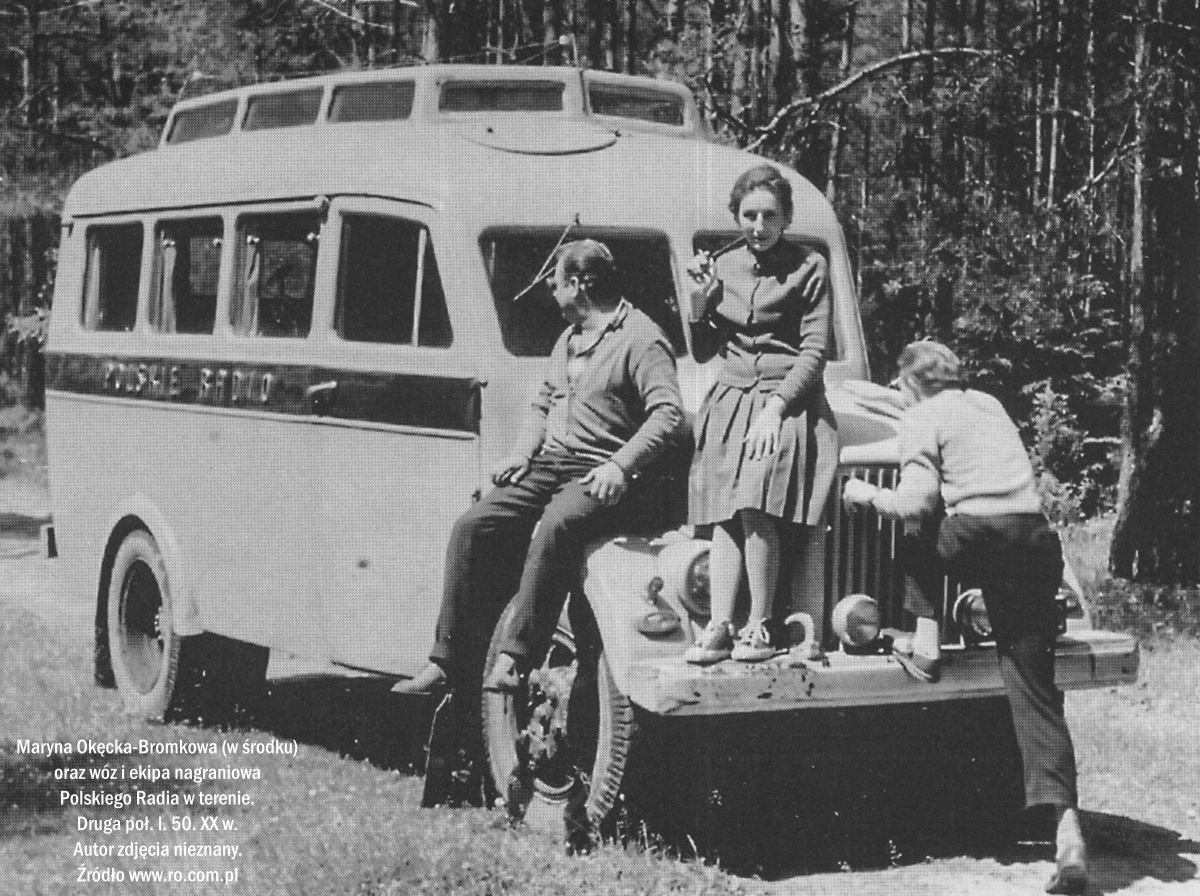
Polish Radio Olsztyn (an archival complex passed on to the Institute of Art of the Polish Academy of Sciences)
The collection of etnographic and ethnomusical recordings made by the Polish Radio Olsztyn team in Warmia and Mazury have been kept in the PAN Institute of Art since 1974. The Institute recievedthe recordings following the decision of the head of PR Olsztyn and the creator of the collection itself – Maryna Okęcka-Bromkowa. An archival complex consists of 135 reel tapes labeled with an acronym AF-PR_Olsztyn and 52 folders that include an additional paper documentation. Mostly tales, interviews, songs and sometimes an instrumental music are saved on the tapes. Said recordings have been created from 1956 to 1974, the head of a recording team has been Maryna Okęcka-Bromkowa. The Archive of Folklore at The Polish Radio in Olsztyn and the Archive of Warmia and Mazury have been build on her initiative. The collection recieved by the Institute of Art is a material gathered by a radio team during field recordings and selected for an IS PAN’s preparations of Warmia and Mazury volumes that were a part of Polish songs and folk music series. The majority of the complex are the recordings from a then województwo olsztyńskie (the biggest part) and voivodship białostockie – the historical lands of Warmia and Mazury. The recordings have been used in radio broadcasts.
The collection consists of about 2321 recordings. A part of them comes from Warmia (about 733), a different part comes from Mazury (about 798), and around 790 recordings come from other regions (some people recorded in nursing homes were born in different regions).
The gathered material is mainly of a lyrical, entertaining and couplet kind. We can also find a lot of lullabys, patriotic and social songs and even historical songs (but rarely so). There’s a lot of ritual repertuar: wedding or calendar rituals related songs, instrumental recordings, including 1972 ones, of Viennian cymbalists relocated to Olsztyn voivodeship after world war II.
A collection’s unquestionable asset is also verbal folklore: tales, stories (including magic related ones), anegdotes, legends of local mountains, villages, lakes and forests, tales of ancient beliefs in ghosts, witches and spooks.
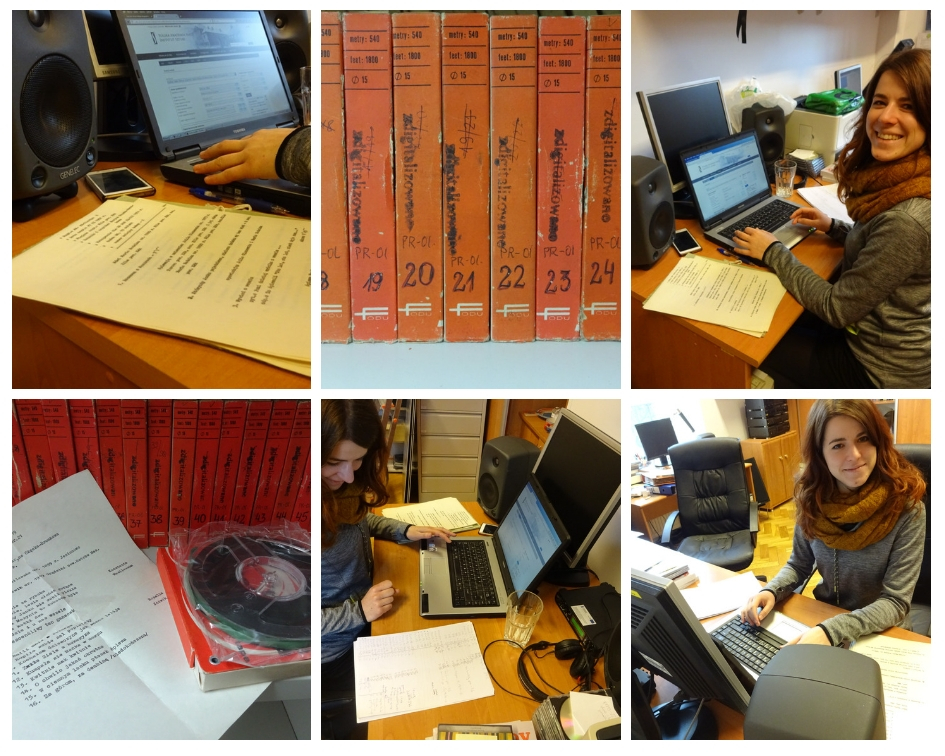
What stands out is also a number of interviews about social and war-related issues, which covered the changes that had come mainly after world war II (though the matter of East Prussia Plebiscite from 1920 also comes up) in Warmia i Mazury: an attitude towards polish and german language, hopes and disappointments that came with the land being incorporated to Poland, relations with polish people that arrived to the country after year 1945, Mazurians’ migrations to Germany etc. The documentation of the Collection of Polish Radio Olsztyn within the Polish traditional music – phonographic heritage project is being digitalized and developed by Anna Walkowiak and Magdalena Bill-Kunce.
Zob. więcej:
Anna Walkowiak, Prezentacja i opis zbioru etnomuzycznych nagrań dokumentalnych Radia Olsztyn zachowanych w Zbiorach Fonograficznych ISPAN, w: Polska muzyka tradycyjna – dziedzictwo fonograficzne. Stan aktualny, zachowanie, udostępnianie, Instytut Sztuki Polskiej Akademii Nauk, Stowarzyszenie Liber Pro Arte, Tom II, Warszawa 2019, s. 163-182.
Arleta Nawrocka-Wysocka, Charakterystyka etnomuzykologiczna źródeł fonicznych zachowanych w kolekcji nagraniowej Radia Olsztyn, w: Polska muzyka tradycyjna – dziedzictwo fonograficzne. Stan aktualny, zachowanie, udostępnianie, Instytut Sztuki Polskiej Akademii Nauk, Stowarzyszenie Liber Pro Arte, Tom II, Warszawa 2019, s. 184-197.